Big Data Analytics begins with the collection of diverse data from internal and external sources, including structured, semi-structured, and unstructured data. This data may come from customer interactions, website visits, IoT devices, and more.
- CALL ANYTIME : 9123456789
- atticinfo@gmail.com

Big Data Analytics
Big Data is growing at 50% per year, with no sign of slowing. Until recently, all this data was seen as a problem. Now it’s being seen as an opportunity. Why? Deep within Big Data lie insights that can lead to competitive differentiation and giant leaps forward no matter what industry you’re in.
We have certified professionals working on data-driven enterprise solutions on Hadoop platform in the areas of analytics, data mining and prediction tools.
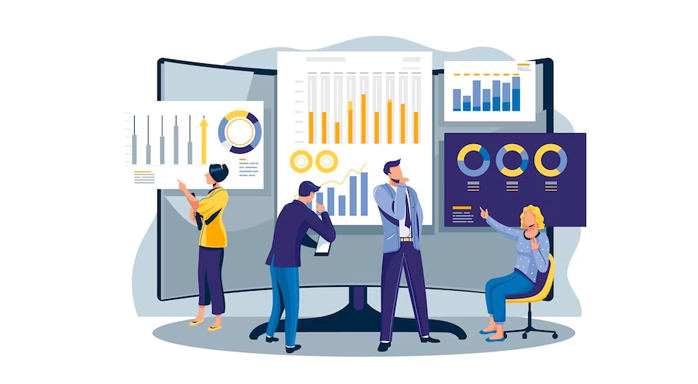
Key Components of Big Data Analytics:
-
Data Collection
-
Data Storage
Once collected, the data is stored in a centralized repository, often using distributed storage systems like Hadoop Distributed File System (HDFS) or cloud-based storage solutions. These systems provide scalability and fault tolerance to handle large volumes of data.
-
Data Processing
Big Data Analytics involves processing and analyzing the collected data to extract insights. This process may include data cleaning, transformation, and enrichment to ensure data quality and relevance.
-
Analytics Techniques
Various analytics techniques are applied to the processed data to uncover patterns, correlations, and trends. These techniques may include descriptive analytics, predictive analytics, and prescriptive analytics, among others.
-
Visualization and Reporting
The insights generated from Big Data Analytics are often presented through data visualizations and reports. Visualization tools like Tableau and Power BI help stakeholders understand complex data patterns and make data-driven decisions.
How our Customers Benefits
- Integrated view of Customer business
- Improved business performance
- Lower total cost of ownership
- Quicker implementations
- Better control over business processes
- Increased profit margins
Our Services
- Information management
- Risk management
- Enterprise performance management
- Data analytics
- Data warehousing

About Us
At 1234, we are passionate about leveraging technology to drive innovation and empower businesses to succeed in today's dynamic market landscape.
About UsContact Info
- #206, Sriman Towers
Chaithanyapuri Colony,
Hyederabad. Telangana - CALL ANYTIME : 9123456789
- atticinfo@gmail.com